Winter Bird Feeding
While the majority of bird species we have all spring and summer go south for the winter, most of the birds you can find in your backyard are here all year long! All winter they are on the search for food, water, and shelter. If you provide birds with these three things you will have a yard full of activity all winter long!

Shelter is one of the most simple things you can provide to attract birds. It requires very little maintenance and it doesn’t have to be elaborate. Birds will roost in shrubs and trees for shelter, as well as tree cavities. You may see birds coming and going from bird houses you have. They are using them to stay out of the wind, snow and cold. You can provide extra shelter for them with roosting pockets and roosting houses. Roosting pockets are small woven huts the birds will go in to stay out of the elements. Roosting houses are similar to bird houses, but they have perches inside of them for multiple birds to go inside.

Water is another simple way to attract birds this winter. The best way to provide water all winter long is with a heated birdbath, or by putting a heater in a birdbath you already have. If your birdbath is made of cement, clay or glass, you should bring it in for the winter and replace it with one that is made of metal, plastic, or granite. Heated birdbaths need to be plugged in. Most of them operate with a thermostat, so they do not run all the time. The heated birdbath never makes the water warm, but it keeps it unfrozen so birds can drink and bathe from it.
Feeding birds is what will bring in the largest diversity to your yard. This time of year birds aren’t as territorial as they are in the spring and summer. Birds of multiple species will form feeding flocks and go from place to place to find food. There are many different things you can feed birds this time of year but lets concentrate on the main staples:
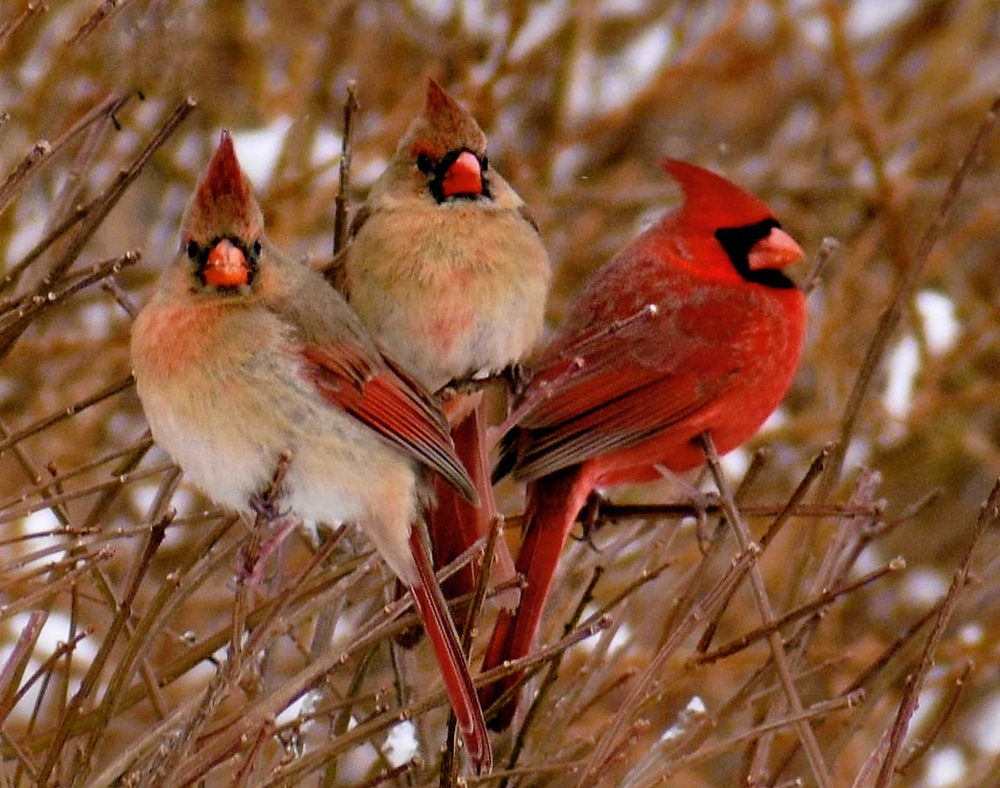
Black oil sunflower is a must in the winter! This seed can be provided by itself, or even better, in a blend with other seeds. Black oil sunflower will give you the biggest diversity of birds compared to other foods. If you don’t want the mess of the shells it can leave behind, try sunflower hearts. It is the inside of the seed and just about every bird who comes to bird feeders will love it! Hopper, tray and tube feeders with trays or large perches are great for sunflower seed. They all have a lot of perching room which is great for cardinals, blue jays, purple finches and sometimes this time of year, evening grosbeaks!

Nyjer is another bird seed staple. It needs its own feeder with small feeding ports because the seed is so small. Nyjer is a favorite of goldfinches, who are here all winter but now look drab. Chickadees, house finches, pine siskins sparrows, and an occasional redpoll may stop by as well! If sparrows are raiding your nyjer feeder try an upside down style. The feeding ports are below the perches, so the birds have to tip upside down to feed. Goldfinches, chickadees, pine siskins and redpolls can do this but sparrows can’t!
Suet is an important source of fat for birds in the winter. Providing suet will attract woodpeckers and nuthatches! We recommend a “paddle tail” style of suet feeder. There is a projection on the bottom of the cage which provides woodpeckers a place to rest their tail, which they will for stability. If squirrels are a problem try our new Squirrel Buster Suet feeder, or hot pepper suet. Squirrels can taste the hot pepper and don’t like it but songbirds don’t have as many taste buds so they cannot taste it!

And finally, don’t forget about the peanuts! Peanuts can be provided in the shell (which blue jays and woodpeckers love!) or out of the shell. Providing peanuts will attract chickadees, titmice, nuthatches, woodpeckers and blue jays. If you want to attract only the smaller birds that eat peanuts, like chickadees and nuthatches, go for a peanut tube feeder. These feeders are made of mesh and don’t have perches, so they will attract the smaller “clinging” birds.

By providing all of these, or a combination of some of these resources this winter, you are sure to see an increase in bird activity! Let us know what brds you are seeing in your yard and what they like best!

I live in Victor and have had my suet out for Two months…just relocated another feeder to front tree…always fresh suet cakes…clean cage feeders….not one woodpecker, nuthatch,..nothing. Also have dome feeder with black oiled sunflower seeds out….always fresh and clean….only have a few snow birds…no birds down this way? We used to live in Penfield for years and had the most beautiful birds…help! Thx.
Debbie
That’s interesting that birds will like to eat nuts as well. I would have thought that they would be too big, but I guess they could be eaten by larger birds. I’ll have to consider getting a birdhouse so I could help the birds eat some nuts and things this winter so they stay warm.
I am a Bird House customer. I am so thankful for you all in our Monroe County area sharing excellent advice on how to serve our birds and critters the best we can. Thank you 😊